

The term design psychology probably reminds you of Feng Shui, human-centred design or how colours affect your psychology but there is more to it than you think, and it impacts you directly.
You most likely live somewhere in the world. This somewhere is designed to house, entertain, get you places and offer you an abundance of services. In this story, we, the lucky ones, live beautifully designed lives directing our moods, dictating our desires and prescribing our needs1. Given the sameness of what we wear, watch and drive, our moods, desires and needs are, more or less, the same (one psychology). We connect online, shop to be happy, upgrade to look successful. What makes us feel us, is by design.
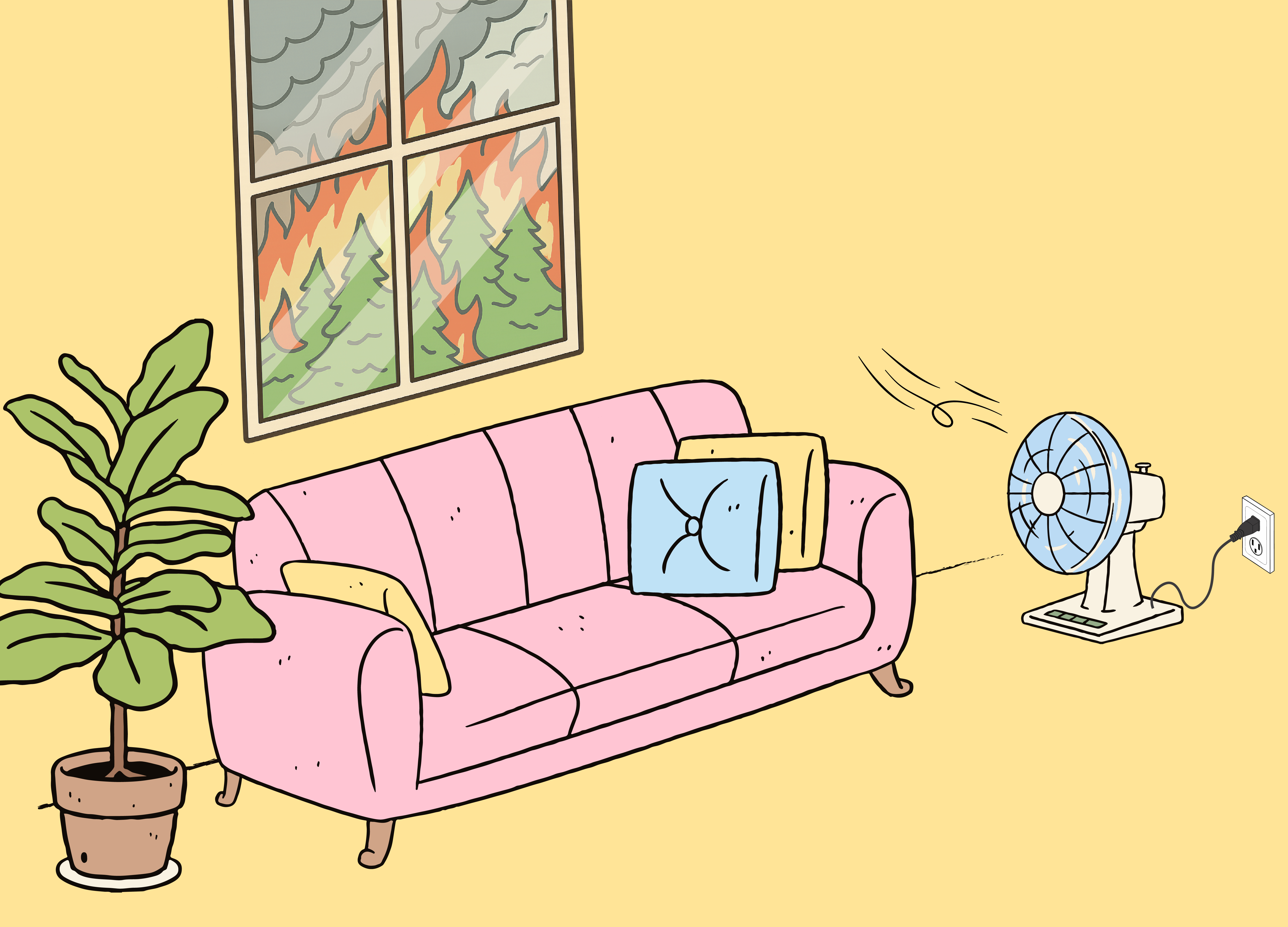
Simply put, design psychology2 is how our environments shape us, and how we shape our environments. Design commands what we need and how to use it, and psychology defines how to be happy and successful by conforming to these designs. While this doesn’t really sound problematic, it becomes so the moment we realise how design and psychology have conditioned us to think, behave and feel.
Mind blowing as it is, it took me two decades to figure out design psychology by studying psychology and architecture, working as a design academic, writing, researching and experimenting with various projects. Refusing to accept the binary of ‘I am the product of my environment’ and ‘I am my own person’, I believe that our choices design the world that has also been designed for us. We redesign what we don’t like or opt out but accept (often uncritically) what makes us comfortable. Unfortunately, the latter is taking away our (and all living beings) future3.
If you think that’s a stretch, consider a global challenge (e.g. climate change) and how design has managed to convince us that:
a. climate change does not exist: Everything is looking fine on the outside, especially if you’re living in a building with electricity and running water in a big city.
b. we can design our way out of it: Think AI, geoengineering, floodwalls and anti-tsunami barriers. And,
c. we are so comfortable we don’t want to change a thing: The buying and upgrading I mentioned before.
Psychology is reinforcing all the above by reassuring us that:
a. climate change is our fault: See individual behaviour change4 and how it’s our personal responsibility to undo all the damage.
b. if we are stressed about climate change something is wrong with us: Suffering from ecoanxiety means we are mentally ill5. And,
c. if we have ecoanxiety we can’t be ‘normal’ therefore we need to be fixed: Translated into psychology treating symptoms and not causes of ecoanxiety6.
Exhibits a, b and c show that design and psychology have been improv-collaborating to reinforce each other’s arguments and reach the same goal:
Sustain an illusion of fictional permanence by bubble wrapping us in soothing denial7.
In contrast to what is available as design psychology right now, I envision an intentional effort to “initiate a new field of knowledge, spark a revolution, and build a community of practice8”. The hope is that you will engage and play with my ideas, bringing them to life through experimentation with intentional design psychology, so we can radically improve the way we do things.
This Substack is about how we think and feel as collectives with the same things at stake, how we can reframe change and redefine normal to explore new designs and psychologies, having in mind what is present instead of what we’d like it to be.
It is a call to arms to discover new strategies of moving forward and act on them, in conditions of impermanence, instability and unknowns, while acknowledging the existing designs that make us interdependent.
Through anecdotes, examples, provocations and cross-pollinating different initiatives, I’ll unfold different approaches of reframing change and impermanence, reactivating our skills and working together.
In contrast to the predominant stance of separating design and psychology, here, they are rethought as part of a continuum, along with other critical ideas and tools that can help us accept our true nature, unpredictability and interdependence.
This is an invitation for intense hanging out to rediscover capabilities, define goals and aspirations and figure out how to maintain and repair what is necessary for our collective adaptation and wellbeing.
As a human being, a mum, and lastly, a professional, I want to put all my effort into safeguarding what’s left of our future by preparing myself and others psychologically and practically about different scenarios that can play out, based on facts, research and experience versus wishful thinking. This is not a manifesto against all things ‘normal’ and how we’ve been trained. It is about embracing the discomfort and thrill of everyday life so we can work with what’s on the ground, collaboratively, with all we’ve got. Please, join me for the ride.
Bauman, Z. (2013). Consuming life. Polity Press.
Kalantidou, E. (2026). Design Psychology. In: Teo, T. (ed.) The Palgrave encyclopedia of theoretical and philosophical psychology. Palgrave Macmillan, Cham.
Fry, T. (1999). A new design philosophy: an introduction to defuturing. UNSW Press.
Maniates, M. (2002). Individualization: Plant a tree, buy a Bike, save the world? In T. Princen, M. Maniates, & K. Conca (Eds.), Confronting consumption (pp. 43–66). MIT Press.
Cosh, S., Ryan, R., Fallander, K. et al. (2024). The relationship between climate change and mental health: a systematic review of the association between eco-anxiety, psychological distress, and symptoms of major affective disorders. BMC Psychiatry 24, 833.
Adams, M. (2021). Critical psychologies and climate change. Current Opinion in Psychology, 42, 13–18.
Norgaard, K. M. (2011). Living in denial: Climate change, emotions, and everyday life. MIT Press.
p.194 in Kalantidou, E. (2025). Introduction to design psychology. Routledge.